
Xperience and your care pathway
Xperience is not just a technique. It is a model of care.
Xperience is how the NeuroNEC team supports people with spinal pain: from listening to choosing the most appropriate treatment, which is often non-surgical, through to a return to movement.
Private visits and care pathways, not covered by the Italian National Health Service (SSN/ASL). A consultation involves no commitment to surgery.

Movement is not the last stage of care. It is part of care from the very beginning.
Three principles
Listen
Your story, your symptoms, what you can no longer do and what you would like to do again.
Find the cause
Clinical examination, imaging and, when helpful, diagnostic injections: symptoms must match what is seen.
Treat precisely
Only what is needed, explained in plain language, to preserve anatomy and movement.
Surgical de-escalation
This is central to our clinical practice: targeting the condition causing your symptoms, preserving anatomy and movement, and supporting a prompt, individual return to activity.
We start with appropriate conservative care. If surgery is necessary, we favour the least extensive targeted decompression that can be effective.
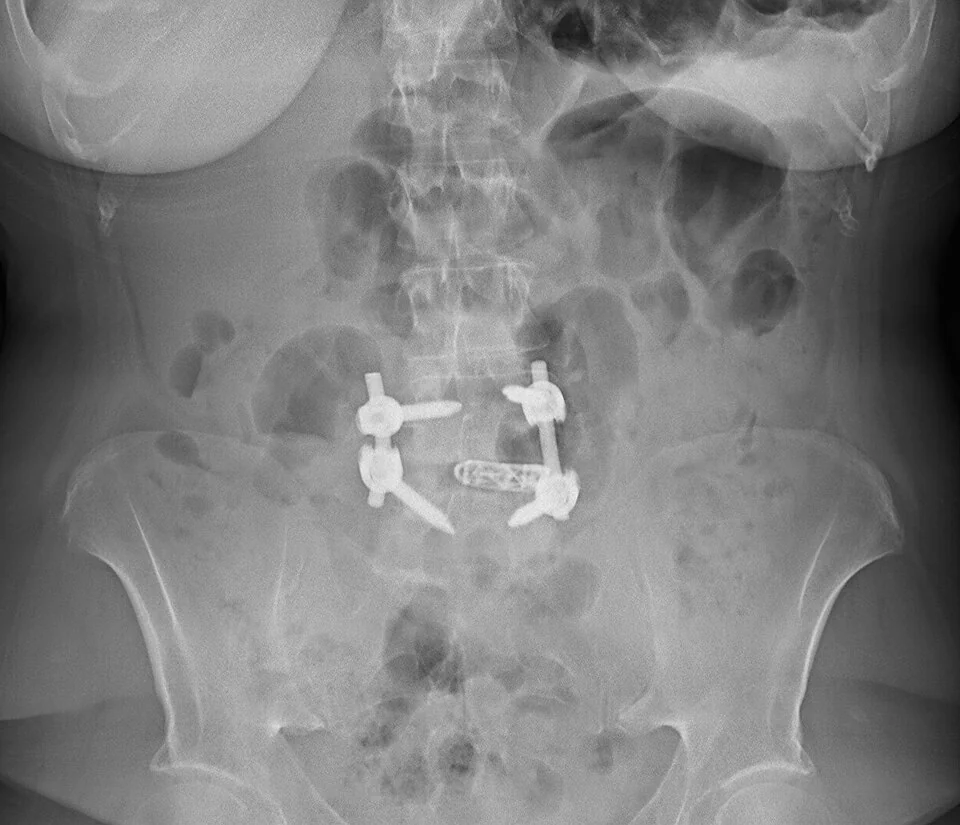
Spinal stabilisation is not automatic: it can often be reserved for a later stage if needed. Significant instability, however, may require it from the outset.
Our philosophy
A clear, protected, accompanied pathway.
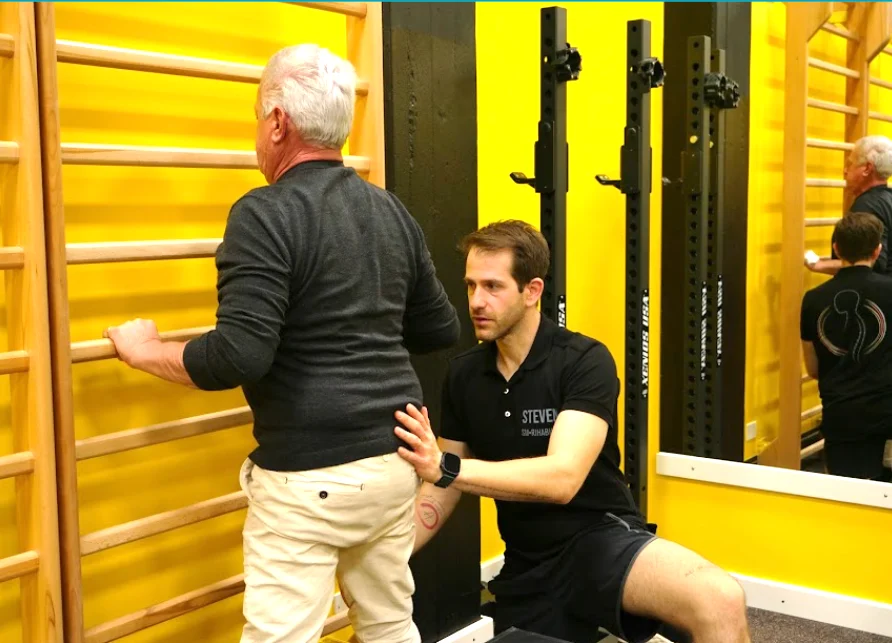
Your doctor, physiotherapist and other team members build a pathway with you around your needs. Goals and milestones are agreed together, at your own pace.
Prepare
Understand your symptoms, discuss your goals and prepare your body for the care pathway.
Personalise your care
Physiotherapy, pain management or targeted surgery when indicated: the choice follows the assessment.
Move with support
Exercises and rehabilitation guided by your physiotherapist, with or without surgery.
Return to an active life
Gradually resume everyday activities, work or sport, with individual goals.
The pathway, step by step
Not everyone goes through every step. Your plan is built around your situation.
See how we coordinate your pathway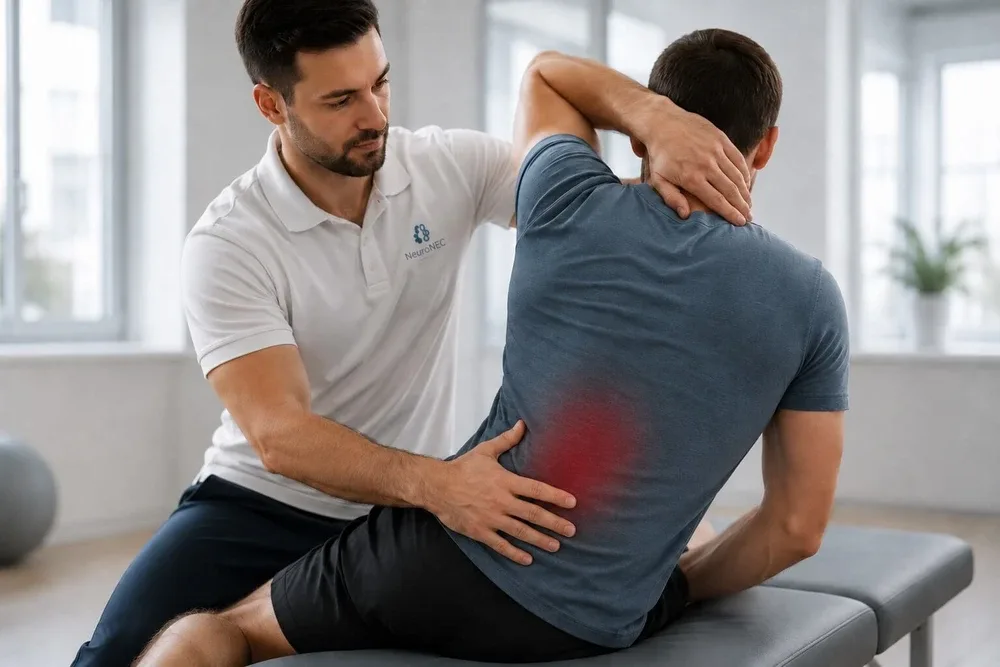
- 01
First contact
The coordination team helps you choose between a video consultation and an in-person visit and explains which imaging to prepare.
- 02
Specialist consultation
Around 30 minutes with Dr Lechanoine: your medical history, imaging and an explanation of his findings.
- 03
Care plan
Physiotherapy, pain management, guided injections, further tests or reassessment over time.
- 04
If surgery is indicated
We discuss benefits, limits, risks and alternatives. You have time to decide.
- 05
Preparation and surgery
Personalised anaesthesia with the anaesthetic team; targeted endoscopic decompression when suitable.
- 06
Recovery and follow-up
Guided movement from the first few days, physiotherapy and, when helpful, nutrition and psychology; a gradual return to everyday life, work and sport.
Guided injections
Performed by the pain specialist, these can be both diagnostic and therapeutic: they help identify the structure causing symptoms and may sometimes relieve them.
The information gained helps refine treatment and, if surgery becomes necessary, define its target more precisely.
Personalised anaesthesia
When appropriate, many endoscopic procedures can be performed under spinal or locoregional anaesthesia, including while awake, without general anaesthesia.
The choice is made with the anaesthetic team, based on the procedure, your health and your preferences. This is not a promise that applies to everyone.
During surgery, the choice is yours
- A film or series
- An audiobook or podcast
- Your favourite music
- Virtual reality, when available
Move early, return gradually
Getting moving the day after surgery is the programme’s aim when your clinical condition allows, at any age: walking, simple exercises and the first steps of rehabilitation.
Returning to everyday life, work and sport happens in stages, with individual goals. Everyone’s timeline is different.
Original English film
The Xperience film
A short original film capturing the spirit of the pathway.
Endoscopy and fusion: an open-minded approach
In our practice, endoscopic decompression is the reference approach when decompression is indicated: it frees the nerves while preserving muscles, ligaments and structures that provide stability.
Fusion / spinal stabilisation remains the right treatment for some indications, such as significant mechanical instability. It is not a failure: it is a clinical choice, made when needed.
An honest word about risk
Every operation carries risks and a recovery period. Indication, discharge time and return to work or sport are always individual and discussed with you before any decision.
Scientific sources
Some clinical studies on endoscopic techniques, for those who would like to read more. They show comparable results in selected populations, not universal superiority.
Have you been offered fusion?
An assessment can explore whether targeted endoscopic decompression with rehabilitation is an appropriate alternative in your case. There is no promise of avoiding fusion: sometimes it remains the right choice.
Videos
Original videos published by NeuroNEC and Dr Lechanoine.
The video is loaded from YouTube (youtube-nocookie.com) only after you click: YouTube is an external service with its own terms.
Interviews and explainers with Dr Lechanoine
A first opinion, without travelling.
Around 30 minutes with Dr Lechanoine, arranged by the NeuroNEC coordination team. By sharing his screen, he shows you your imaging and discusses the options with you.
Private visits and care pathways, not covered by the Italian National Health Service (SSN/ASL). A consultation involves no commitment to surgery.