
Lumbar disc herniation
When pain runs down your leg.
Sciatica, tingling, a leg that feels weaker. Often, a herniated disc is irritating a nerve, and this very often improves with conservative care.
Private visits and care pathways, not covered by the Italian National Health Service (SSN/ASL). A consultation involves no commitment to surgery.
What it is, in plain words
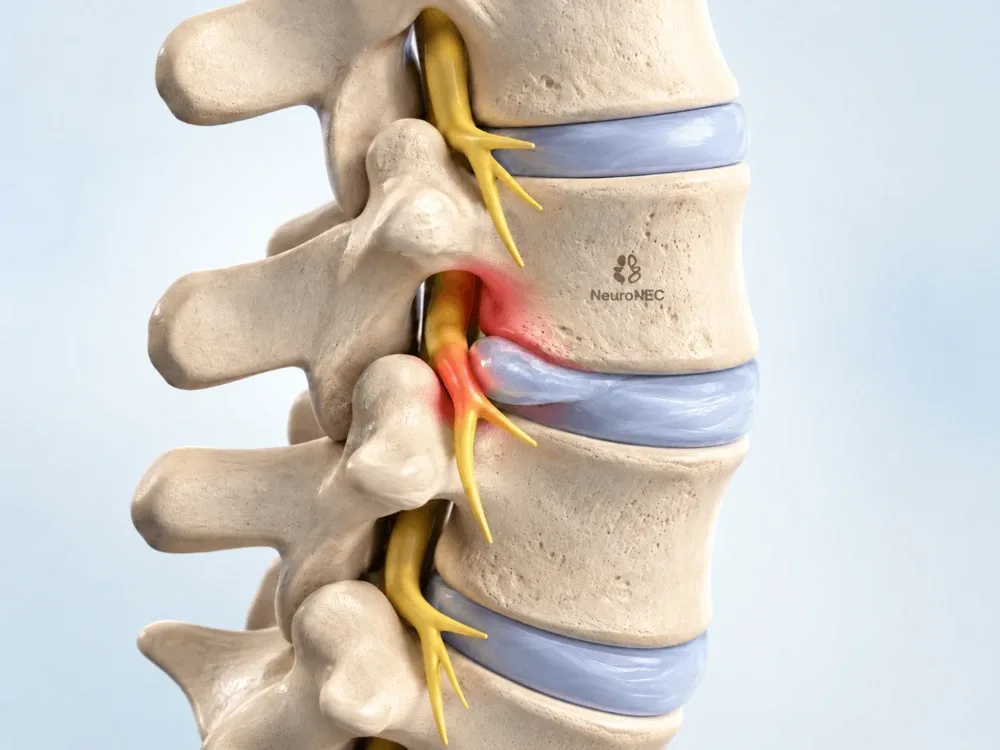
Between the vertebrae sit the discs, cushions that absorb load. If part of a disc protrudes, it can press on or inflame a nerve root: this is a disc herniation.
The resulting pain, called radiculopathy, follows the nerve's path: from the back to the buttock and thigh, sometimes down to the foot.
Common symptoms
- Leg pain often stronger than the back pain
- Tingling or numbness in a specific area of the leg or foot
- Pain worse when coughing, sneezing or sitting for long
- Sometimes weakness of a muscle, for example lifting the foot
The assessment
- The history of your symptoms and how they evolved
- Neurological examination: strength, sensation, reflexes
- MRI read together with the clinical picture
- A diagnosis made by the doctor, not from a list of symptoms
Conservative care
- 01
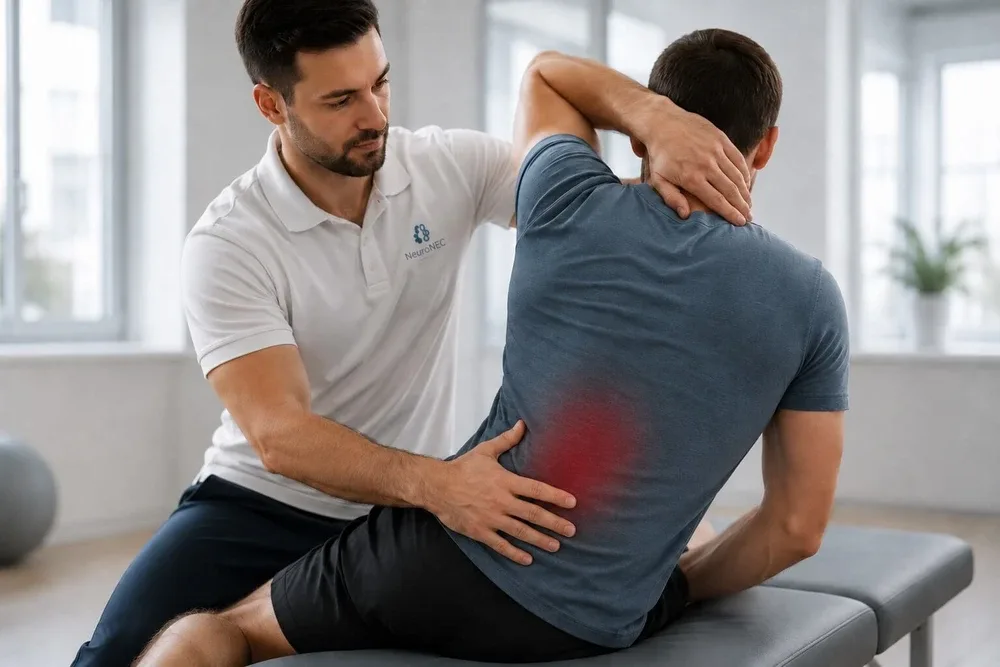
Physiotherapy and movement
Guided exercises to move with confidence; many herniations shrink over the following weeks.
- 02
Pain management
Targeted medication and, when indicated, guided injections.
- 03
Reassessment
Following changes in symptoms to decide at the right time.
When to consider surgery
Surgery is discussed when adequate conservative treatment has not provided acceptable relief, or when there is a significant or worsening neurological deficit, provided imaging matches the symptoms.
You do not need to wait until pain becomes unbearable. Neurological emergencies are an exception and need immediate treatment.
Endoscopic discectomy
When surgery is indicated for a lumbar disc herniation, endoscopic discectomy is the reference approach in our practice.
Through openings of a few millimetres, the fragment causing compression is precisely removed, freeing the nerve while respecting muscles and other structures. Suitability is determined by clinical assessment and imaging.
Like all surgery, it carries risks, including the possibility of the herniation recurring, and does not give the same result for everyone.
Every operation carries risks and a recovery period. Indication, discharge time and return to work or sport are always individual and discussed with you before any decision.
Scientific sources
Some clinical studies on endoscopic techniques, for those who would like to read more. They show comparable results in selected populations, not universal superiority.
Already been offered surgery?
A second opinion can help you understand whether now is the right time and which technique suits you best.
Frequently asked questions
Does a herniated disc always need surgery?
No. Many patients improve with conservative care. Surgery is discussed when this is not enough or when neurological deficits are present.
Do I have to wait until the pain is unbearable?
No. If adequate conservative treatment has not provided acceptable relief, it makes sense to discuss the options.
Do I need an MRI before the consultation?
If you already have one, it is very helpful. If not, the doctor will decide whether and when to request it.
Videos
Original videos published by NeuroNEC and Dr Lechanoine.
The video is loaded from YouTube (youtube-nocookie.com) only after you click: YouTube is an external service with its own terms.
Interviews and explainers with Dr Lechanoine
A first opinion, without travelling.
Around 30 minutes with Dr Lechanoine, arranged by the NeuroNEC coordination team. By sharing his screen, he shows you your imaging and discusses the options with you.
Private visits and care pathways, not covered by the Italian National Health Service (SSN/ASL). A consultation involves no commitment to surgery.